
Setting the cerebrovascular table
A multidisciplinary case conference that preserves disagreement
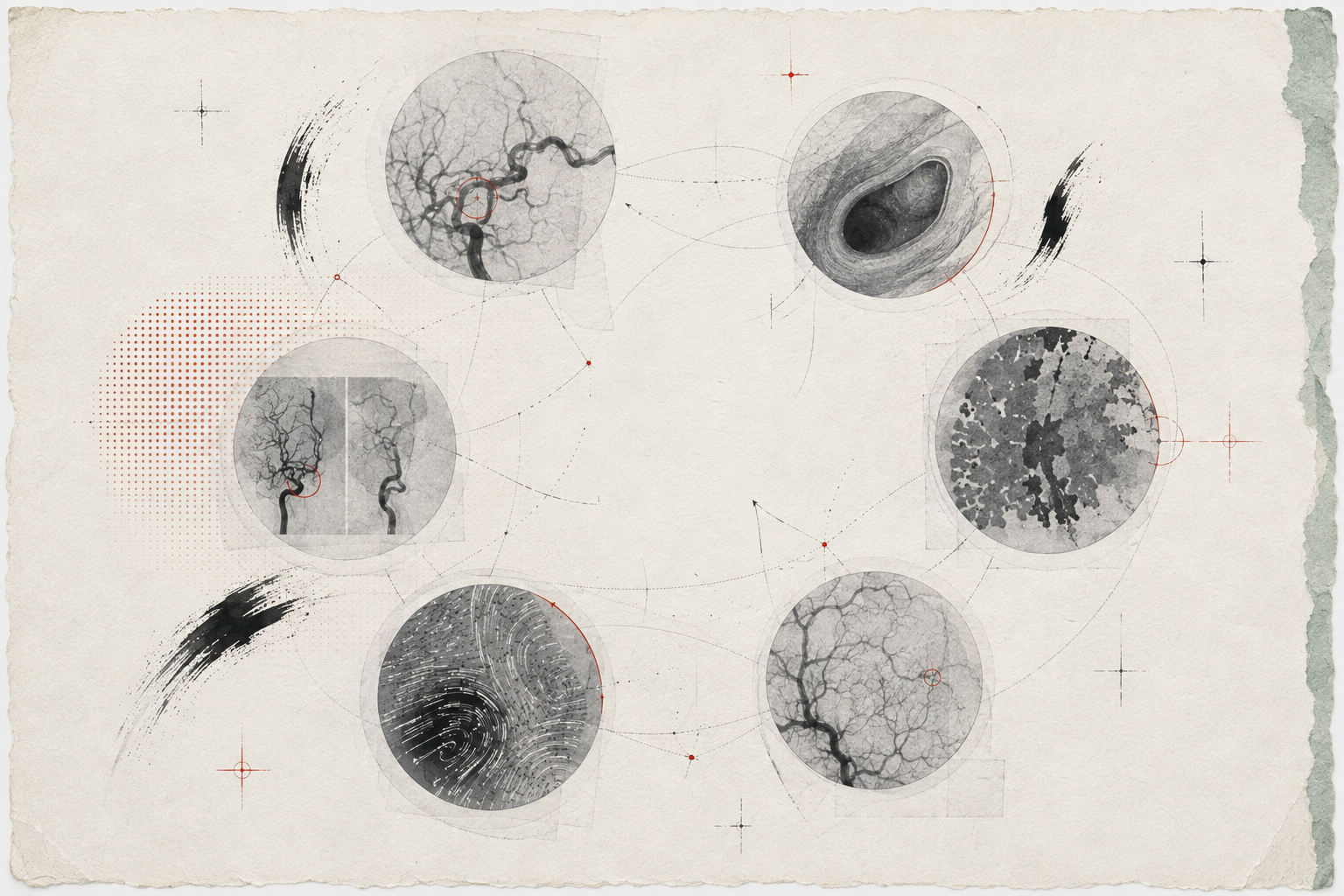
Did the meeting produce consensus—or merely silence dissent?
Six ingredients,
one interpretation.
Four movements.
Frame
State the decision and the uncertainty before presenting a preferred solution.
Distribute
Give each discipline the same problem, not separate fragments.
Challenge
Invite the strongest argument against the emerging consensus.
Return
Translate the discussion into choices a patient can understand.
Productive dissent.
A useful conference makes room for the strongest competing interpretation before consensus hardens around the first plausible answer.
EVIDENCE / DIALOGUE / CHOICEHold both sides
in view.
Expert synthesis is rarely a choice between simple opposites. The work is to understand how each tension changes confidence.
Make the reasoning visible.
Open with the decision and uncertainty, not a preferred procedure. Ask each discipline to challenge the shared frame, then translate the result back to patient choices.
“A multidisciplinary table is valuable when disagreement remains audible.”Clinical Recipes / Editorial reflection
Three deeper
readings.
EVIDENCE → DISSENT → DECISION
Place the uncertainty at the centre
Begin with the decision that must be made and the uncertainty preventing it. This keeps the conference from becoming a sequence of polished presentations that never address the same problem.
Protect the dissenting view
Ask each discipline for the strongest argument against the emerging preference. Productive disagreement reveals blind spots in natural-history estimates, technical feasibility and assumptions about patient benefit.
Return to an intelligible choice
Consensus is useful only when translated into options, trade-offs and residual uncertainty. The patient should receive the reasoning of the room, not merely its final vote.
Questions for
colleagues.
- 01
What precise decision is this meeting trying to improve?
- 02
Which credible interpretation has not yet been heard?
- 03
Can the recommendation be explained without procedural shorthand?
A good conference does not erase disagreement; it converts disagreement into a safer decision.
Multidisciplinary review supports reasoning but does not replace informed, individualised decision-making.